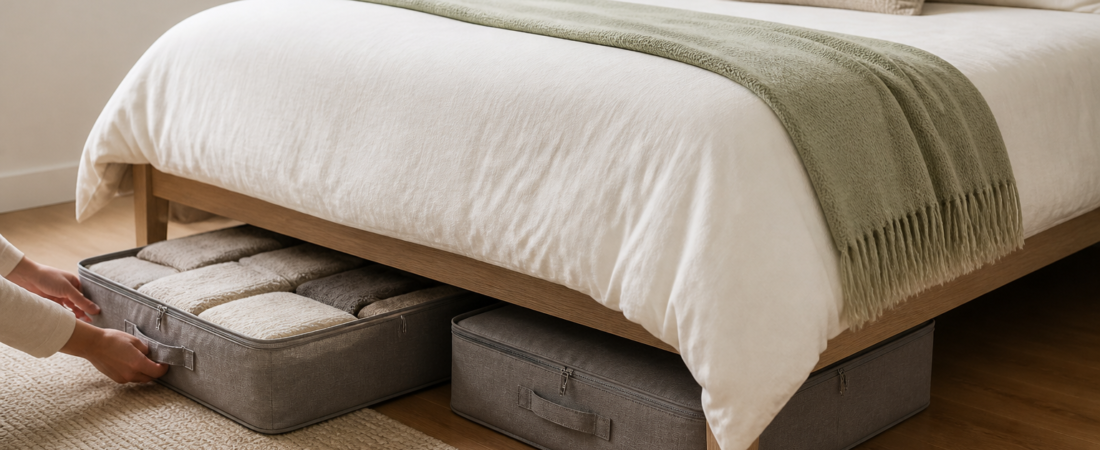
In a small bedroom, the area beneath the bed can hold an impressive amount of clothing, bedding, shoes, or luggage accessories. The wrong container, however, can trap dust, snag on the frame, or become so difficult to reach that its contents are effectively forgotten.
This guide focuses on practical under-bed storage formats for different needs. Our selections are based on published dimensions, materials, access, dust protection, and suitability for compact homes. We have not physically tested every product mentioned, so always confirm current specifications before ordering.
Quick picks
- Best soft-sided option: IKEA SKUBB Storage Case
- Best rigid budget option: IKEA SAMLA low box with lid
- Best drawer-style option: IKEA MALM under-bed boxes, when compatible with the bed frame
- Best for frequent access: a low-profile clear bin with wheels and a split lid
- Best for bulky textiles: a zippered fabric case with reinforced sides
- Best for very low beds: vacuum bags used inside a protective zippered case
Best overall soft case: IKEA SKUBB
The SKUBB is a useful starting point for renters and anyone who wants lightweight storage. IKEA lists several sizes at roughly 7.5 inches high, with a zipper, side handle, and ventilation panels. The flexible construction makes it suitable for bedding, sweaters, and other soft items.
Best for: seasonal clothes, spare sheets, pillows, and blankets.
Consider before buying: fabric cases are easier to pull when they are not overfilled. They are less suitable for heavy books or objects with sharp corners, and you should measure around center supports beneath the bed.
Best rigid box: a low clear bin with a secure lid
A rigid plastic box protects its contents from dust and accidental spills and will not collapse when partially empty. Clear sides make it easier to identify what is inside, while a solid lid allows two shallow boxes to stack if the bed clearance permits.
Look for rounded corners, a lid that opens from either side, and recessed or smooth wheels. A split lid can be especially helpful when a nightstand prevents the whole container from sliding out.
Best for: shoes, craft materials, keepsakes, and clothing that should not be compressed.
Best integrated look: bed-specific drawers
Drawers designed for a particular bed frame create a clean, furniture-like appearance. IKEA’s MALM boxes are one familiar example, but compatibility matters: dimensions, rail position, floor surface, and bed size must all match.
Best for: everyday clothing and linens that you access several times a week.
Consider before buying: fitted drawers cost more, are harder to reuse with another bed, and need enough open floor area to pull out fully.
Best for bulky bedding: reinforced fabric cases
A structured fabric case combines some flexibility with sides that hold their shape. Choose breathable panels for clean, dry textiles and a clear top if you own several identical cases. Two smaller cases are usually easier to handle than one oversized bag.
Best for: comforters, guest bedding, winter coats, and extra pillows.
Best for very limited clearance: vacuum storage inside a case
Vacuum bags reduce the volume of soft goods, but they should not be dragged directly across the floor. Place the compressed bag inside a zippered case or shallow bin to protect the valve and plastic.
Avoid long-term compression of delicate natural fills unless the manufacturer allows it. Recheck the seal occasionally.
How to measure correctly
- Measure the height from the floor to the lowest part of the frame—not the mattress.
- Subtract at least half an inch for easier movement.
- Measure the usable depth around legs and center supports.
- Check the open floor area required to pull out a rigid drawer.
- Confirm whether the floor is carpet, wood, or tile; tiny wheels may struggle on thick carpet.
Features worth paying for
- A lid or zipper that blocks dust.
- Handles attached to reinforced fabric.
- Smooth wheels for heavy or frequently accessed items.
- A transparent top or label pocket.
- Dividers for shoes and accessories.
- Materials that can be wiped clean.
What not to store under the bed
Avoid food, damp textiles, leaking toiletries, important documents without a waterproof inner sleeve, and objects you need during an emergency. Do not block floor vents, electrical equipment, or required access to an adjustable bed mechanism.
How many containers do you need?
Start with the belongings, not the available void. Assign one category to each container and leave some room for easy closing. Filling every inch under the bed often encourages unnecessary storage and makes cleaning difficult.
For most small bedrooms, two to four well-chosen cases are more manageable than many mismatched bags.
Our recommendation
Choose a soft zippered case such as the IKEA SKUBB for light textiles and a low rigid box for items that need more protection. If you access the contents every week, prioritize wheels or fitted drawers. If you use them only seasonally, lightweight cases usually provide better flexibility and value.
Product availability and specifications can change. Measure your bed and confirm the manufacturer’s current dimensions before purchasing.

Recommended product: Yecaye Under-Bed Storage with Wheels
Why it fits: adds accessible rolling storage beneath the bed for clothes, linens, or shoes.
As an Amazon Associate I earn from qualifying purchases. Price, availability, and product details may change.