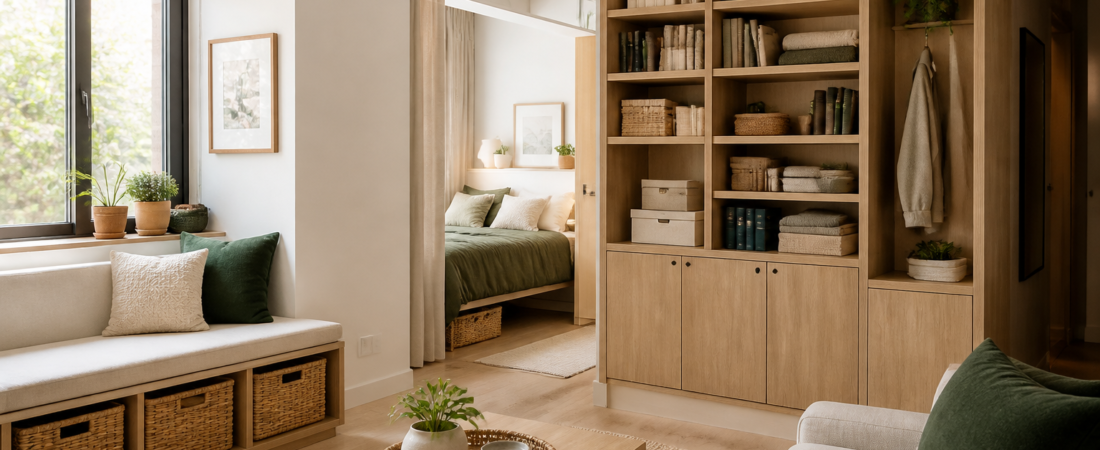
A small apartment does not need to feel temporary, crowded, or constantly unfinished. The most effective storage ideas do more than hide belongings: they make everyday routines easier, keep frequently used items within reach, and help each room feel intentional.
The key is to stop treating storage as a collection of containers and start treating it as a system. Before buying another basket, look at how you move through your home, where clutter naturally collects, and which objects deserve the easiest access.
Four products that support the highest-impact ideas
| Product | Space used | Best role | Limit |
|---|---|---|---|
| JARLINK organizer | Back of a door | Small daily items | Check door clearance |
| Simple Houseware organizer | Cabinet door | Kitchen or bath supplies | Adds load to the door |
| SPACEKEEPER cart | Narrow floor gap | Mobile vertical storage | Open contents stay visible |
| Stackable closet baskets | Shelf height | Folded goods and categories | Avoid overstacking |
Start with a quick space audit
Walk through the apartment with a measuring tape and note three kinds of space: empty vertical areas, shallow gaps, and furniture footprints that could serve more than one purpose. Measure the clearance under the bed, the depth behind doors, the width beside appliances, and the wall space above desks or dressers.
Then sort belongings into three practical groups:
- Daily: items that should be reachable without moving anything else.
- Weekly: items that can live in drawers, cabinets, or labeled bins.
- Seasonal: items that can occupy under-bed storage, high shelves, or harder-to-reach areas.
This prevents a common small-space mistake: giving prime storage to things you rarely use while everyday objects remain on counters.
1. Use the full height of the room
When floor area is limited, look up. Tall bookcases, wall-mounted shelves, and cabinets that extend close to the ceiling provide more capacity without making the room wider. Keep attractive or frequently used pieces around eye level, then reserve upper shelves for labeled boxes, spare linens, or seasonal decor.
Leave a little visual breathing room rather than filling every shelf edge to edge. A few open areas make tall storage feel calmer and less imposing.
2. Turn the space under the bed into a seasonal zone
Under-bed storage works best when it has a defined job. Use it for off-season clothing, extra bedding, luggage accessories, or sentimental items—not as an unorganized overflow area.
Measure from the floor to the lowest part of the bed frame before choosing containers. Lidded boxes protect against dust, fabric cases compress slightly around uneven contents, and wheeled drawers are convenient when you need regular access.
3. Choose furniture that earns its footprint
A storage ottoman can provide seating, a footrest, a coffee-table surface, and a home for throws or games. A platform bed can replace a dresser. A bench near the entry can combine shoe storage with a comfortable place to sit.
Multifunctional furniture is most useful when every function fits your routine. A lift-top coffee table is not a space saver if the top is always blocked by decorative objects.
4. Install shallow storage behind doors
Doors can hold more than hooks. Slim over-door organizers work for shoes, cleaning supplies, pantry packets, accessories, or office materials. In a bathroom, narrow racks can keep backup toiletries organized without crowding the vanity.
Check that the organizer does not prevent the door from closing or damage the frame. Adhesive bumpers can reduce movement and noise.

Simple Houseware Over-Cabinet Door Organizer
Best for: using the inside or outside of a cabinet door
Advantages: adds a shallow basket without occupying a shelf.
Consider: confirm door thickness, handle clearance and allowable load.
As an Amazon Associate I earn from qualifying purchases. Price, availability, and product details may change.
5. Create a landing zone near the entrance
Even a tiny entry benefits from a predictable place for keys, mail, shoes, and bags. Combine a shallow wall shelf or narrow cabinet with a tray, a few hooks, and one small basket for items that need attention.
Keep this area tightly edited. The goal is to support arrivals and departures, not to store everything that enters the apartment.
6. Use drawer dividers to preserve empty space
Unstructured drawers quickly become a single mixed layer. Adjustable dividers or small boxes create boundaries for clothing, kitchen tools, cosmetics, and cables. File-folding soft items makes more of the drawer visible and reduces the need to disturb the entire stack.
Before buying organizers, remove duplicates and measure the inside of the drawer—not only its exterior.
7. Add shelves above existing furniture
The wall above a desk, sofa, toilet, or dresser is often underused. One or two shelves can hold books, framed art, small baskets, or office supplies while keeping the floor clear.
Match shelf depth to the location. A shallow shelf above a workspace feels lighter and is less likely to become a head-bumping hazard. Always use appropriate anchors and respect the stated weight limit.
8. Use narrow rolling carts in awkward gaps
A slim cart can turn the gap beside a refrigerator, washer, desk, or vanity into useful storage. Wheels make deep spaces easier to access and allow the cart to serve multiple zones when needed.
Choose open shelves for items you reach often and opaque containers for visually busy supplies.

SPACEKEEPER 4-Tier Slim Rolling Cart
Best for: turning a narrow kitchen, bath or laundry gap into mobile storage
Advantages: four tiers and wheels in a slim vertical format.
Consider: open tiers work best when contents are grouped and edited.
As an Amazon Associate I earn from qualifying purchases. Price, availability, and product details may change.
9. Treat baskets as categories, not decorations
Baskets are helpful only when each one has a clear purpose. Assign categories such as workout gear, pet supplies, device chargers, or weekend linens. Avoid a general “miscellaneous” basket; it usually becomes a delayed decision rather than a storage solution.
Labels can be discreet. A small tag on the inside edge is enough if you prefer a cleaner look.
10. Build a compact cleaning station
Cleaning products often spread across several rooms. Consolidate the essentials in one handled caddy and store backups together. Wall-mounted holders can keep a broom, mop, or vacuum attachment vertical inside a closet or utility corner.
Keep chemicals in their original containers and follow safety guidance, especially in homes with children or pets.
11. Make the closet work in layers
Most closets have one rod and one shelf, leaving usable height between hanging clothes and the floor. Add a second hanging rod for shorter garments, stackable drawers, shelf dividers, or a hanging organizer.
Keep the floor as clear as possible so the closet remains easy to clean and items do not disappear behind one another.

Stackable Foldable Closet Baskets, 5-Pack
Best for: building removable categories on shelves
Advantages: five foldable, stackable bins that act like pull-out drawers.
Consider: keep heavier items on the bottom and follow stacking guidance.
As an Amazon Associate I earn from qualifying purchases. Price, availability, and product details may change.
12. Use the sides of cabinets and furniture
The exposed side of a kitchen cabinet, wardrobe, or desk can support a rail, hook, magnetic strip, or narrow rack. These small additions are useful for towels, headphones, cooking tools, or frequently used accessories.
For rentals, look for removable options and test adhesives in an inconspicuous area first.
13. Decant only when it solves a real problem
Matching containers can make a pantry look calm, but transferring every product creates extra maintenance. Decant dry goods when the original packaging is difficult to stack, does not reseal, or hides the remaining quantity. Otherwise, bins that group original packages may be simpler.
If you decant food, include expiration and preparation information on the container.
14. Give cables and chargers one controlled home
Use a small divided box for spare cables and label them by device. Near a desk or media console, secure the active cords along the back edge so they do not collect on the floor. Remove obsolete cables rather than storing them indefinitely.
15. Rotate instead of displaying everything
Small homes feel more spacious when not every decorative object is visible at once. Keep a small rotation of artwork, books, textiles, and seasonal accents. Store the remainder together and change the display when you want a refresh.
This creates variety without requiring new purchases.
16. Establish a one-in, one-out boundary
Choose categories with firm physical limits: one shelf for mugs, one drawer for workout clothing, or one bin for gift wrap. When the boundary is full, edit the category before adding more. The container becomes a simple decision-making tool.
17. Leave room for the system to breathe
Storage that is packed to maximum capacity is difficult to maintain. Aim to leave a little open space in frequently used drawers, closets, and shelves. That margin makes it easier to put things away and absorb temporary changes without creating visible clutter.
A simple weekend plan
- Choose one problem area rather than the entire apartment.
- Remove everything and group similar items.
- Discard, donate, relocate, or repair what no longer belongs there.
- Measure the available space.
- Reuse containers you already own before purchasing new ones.
- Label categories and test the system for one week.
- Adjust anything that feels inconvenient.
Final thought
The best small-apartment storage system is not the one with the most bins. It is the one that makes putting something away almost as easy as leaving it out. Start with one recurring frustration, use the space you already have more deliberately, and add products only when they solve a specific need.

Recommended product: JARLINK Over-the-Door Organizer
Why it fits: uses overlooked door space without taking up floor area and matches the article’s vertical-storage strategy.
As an Amazon Associate I earn from qualifying purchases. Price, availability, and product details may change.